The style design house 2026 interior marks a turning point for homes in the United States. Rooms lean expressive, flexible, and human-centered. Color acts like architecture, while craft and technology work in harmony. This is where 2026 interior design trends meet real life.
Expect irregular lines, tactile walls, and behavior-smart layouts that feel easy to live in. Think cremèle and caramel neutrals instead of stark white, with clay and terracotta warming light-rich spaces. Electric blues, lime greens, and hot pinks bring punch—used sparingly yet boldly.
Designers spotlight a craft renaissance referenced by AD PRO and Decorilla. Freehand brushwork sits beside embroidery on wood and modern passementerie. Studios like Young Huh, GrecoDeco, Studio Valle de Valle, and Post Company push ornament beyond nostalgia into fresh, functional art.
Technology gets tactile, too. Algorithmic ergonomics shapes seating that supports the body. AI tunes light, comfort, and energy throughout the day. Dynamic OLED murals evolve as living art—an upgrade that fits future home design without losing warmth.
Market shifts guide U.S. interior trends toward lighter, sculptural furniture and warmer palettes. Mixed textures move beyond bouclé, and collected, mismatched pieces feel personal. If you want modern home ideas 2026 that last, edit for comfort, character, and circular materials.
Key Takeaways
- 2026 interior design trends favor expressive color, flexible layouts, and human-centric comfort.
- Irregular forms and tactile walls blur art and architecture for daily living.
- Cremèle neutrals, clay tones, and electric accents define future home design palettes.
- Craft is back: freehand finishes, embroidery on wood, and refined trims feel modern.
- Smart systems meet touchable materials for AI-guided light, energy, and ergonomics.
- U.S. interior trends shift to lighter silhouettes, warmer moods, and layered textures.
- Modern home ideas 2026 prioritize sustainable luxury and circular choices.
Future-forward design ethos: irregularity, sensorial immersion, and human-centric spaces
2026 brings a calm yet expressive shift. Homes favor irregular interiors with soft curves, tactile finishes, and forms that evolve with daily use. This is a human-centric design moment, where comfort, adaptability, and material honesty guide every choice.
Designers treat rooms as unified sculptures. Architecture and art merge through jagged mosaic mirrors, curved millwork, and hand-formed edges. The result feels personal, resilient, and tuned to how people live.
Why irregularity leads 2026 interiors beyond rigid minimalism
Rigid lines give way to seamless bends and organic transitions. Irregular interiors use oiled woods, plaster sweeps, and layered stone to add movement without clutter.
Edges invite touch. Patina builds character. The room reads like a lived-in canvas, not a showroom vignette.
From photo-perfect to people-first: comfort and behavior-driven layouts
Spaces prioritize how families move, rest, and gather. Behavior-driven layouts cluster seating for eye-level talk, widen paths for flow, and place storage where hands reach first.
Human-centric design means fewer staged moments and more genuine ease. Upholstery supports posture, while lighting reduces glare and strain.
Sensorial immersion: rooms that respond to mood, body, and climate
Sensorial interiors 2026 layer sound-dampening panels, textured wallcoverings, and adaptive light. Surfaces soften acoustics while dim-to-warm LEDs track the day’s arc.
Air, scent, and temperature shift with needs, creating quiet zones for focus and bright zones for play—all without visual noise.
Functional drama: movable partitions, statement ceilings, sculptural islands
Functional drama design blends theater with utility. Sliding screens carve a study from a lounge in seconds. Coffered or ribbed ceilings pull the eye up and improve acoustics.
In kitchens, sculptural islands anchor social life and prep. Materials work hard, and forms flex as plans change—beauty built to perform.
Color stories of 2026: cremèle neutrals, clay revival, and electric saturation
The 2026 color trends favor warmth, clarity, and control. Palettes feel human, not sterile, with tones that flatter natural light and finish work from brands like Farrow & Ball, Benjamin Moore, and Sherwin-Williams. Designers balance comfort and character through calibrated saturation, avoiding fatigue while keeping rooms vivid and alive.
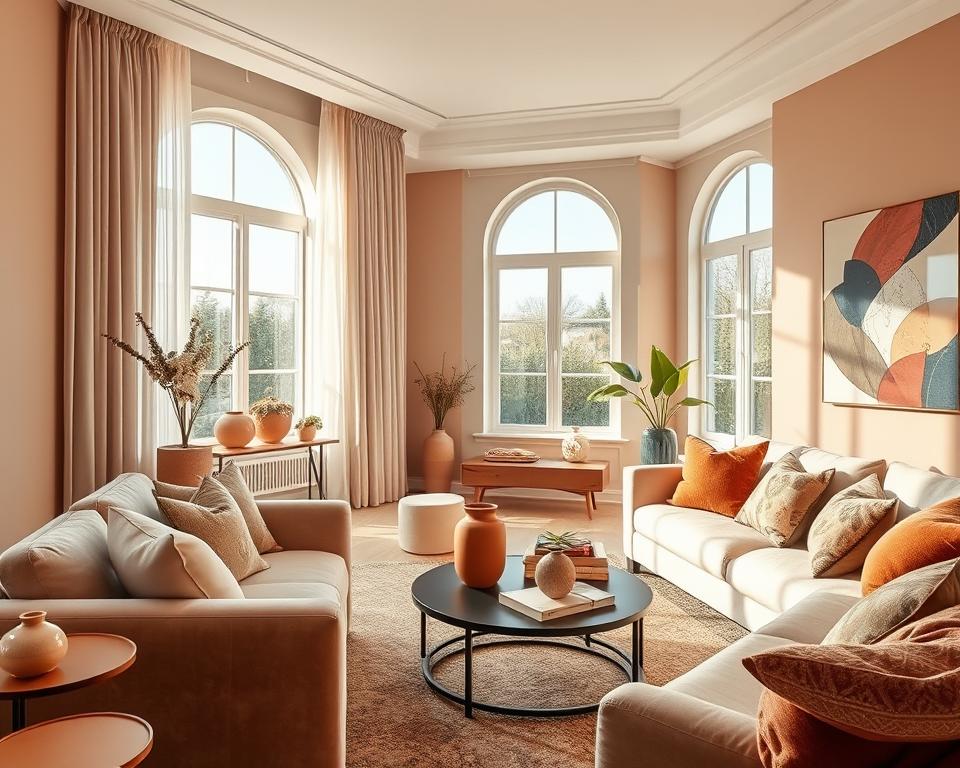
Cremèle and caramel neutrals replacing stark whites and greige
Cremèle neutrals and soft caramel step in for chalky whites and flat greige. These hues warm plaster, oak, and brass, giving trim and paneling more presence. They also soften daylight shifts, so rooms read inviting from dawn to dusk.
Pair with unlacquered brass, walnut, and linen for a calm base that still has personality. The effect supports layered art without stealing focus, a hallmark of the 2026 color trends.
Clay and terracotta tones for light-rich rooms from coast to coast
Clay and terracotta interiors glow in sunlit spaces, where rust and earthy orange deepen across the day. These tones ground open plans and bring out the grain in reclaimed wood. They also sit beautifully next to forest green and midnight blue accents.
Use limewash or matte finishes to keep walls breathable and tactile. In entryways, a terracotta checker pairs well with handmade tile, adding quiet movement that reads timeless.
Electric blues, lime greens, and hot pinks as architectural color
Color turns structural with electric blue lime green hot pink moving onto cabinets, doors, and soffits. A cobalt island or lime pantry frames sightlines like a portal, giving function a clear edge. When undertones are tuned, these brights work in modern and traditional shells alike.
Keep ceilings or floors steady to let the hue do the heavy lifting. In small baths, a hot pink vanity with polished nickel hardware brings joy without visual noise.
Bold monochrome with layered textures for depth without clutter
Monochrome layered textures deliver drama and order at once. Think navy velvet next to powder-blue silk and bluish metal, all within a single family of blues. The look reads rich, not busy, because texture takes the lead over pattern.
For living rooms, build a tonal stack—paint, fabric, stone—within one range. This approach aligns with the 2026 color trends and keeps rooms photogenic yet deeply livable.
| Palette Move | Hero Shades | Best Surfaces | Material Pairings | Design Payoff |
|---|---|---|---|---|
| Cremèle neutrals | Cremèle, caramel, warm ivory | Walls, trim, millwork | Brass, white oak, linen | Softer light, refined warmth |
| Clay and terracotta interiors | Rust, terracotta, sienna | Feature walls, floors, tile | Reclaimed wood, stone, green accents | Earthy depth, day-to-night glow |
| Electric architecture | Electric blue lime green hot pink | Cabinetry, doors, soffits | Nichel finishes, quartz, concrete | Clear focal points, energetic flow |
| Monochrome layered textures | Navy to powder blue, charcoal to silver | Upholstery, drapery, metalwork | Velvet, silk, patinated metals | Depth without clutter, polished calm |
style design house 2026 interior: key room-by-room strategies
Design moves shift from show-home polish to human rhythm. Surfaces carry touch, light adapts in layers, and color leads with intention. Across rooms, craft-forward details—freehand brushwork, CNC-routed timber, and micro-drilled textures—bring story and scale while aligning with living room trends 2026 and the need for restorative flow.
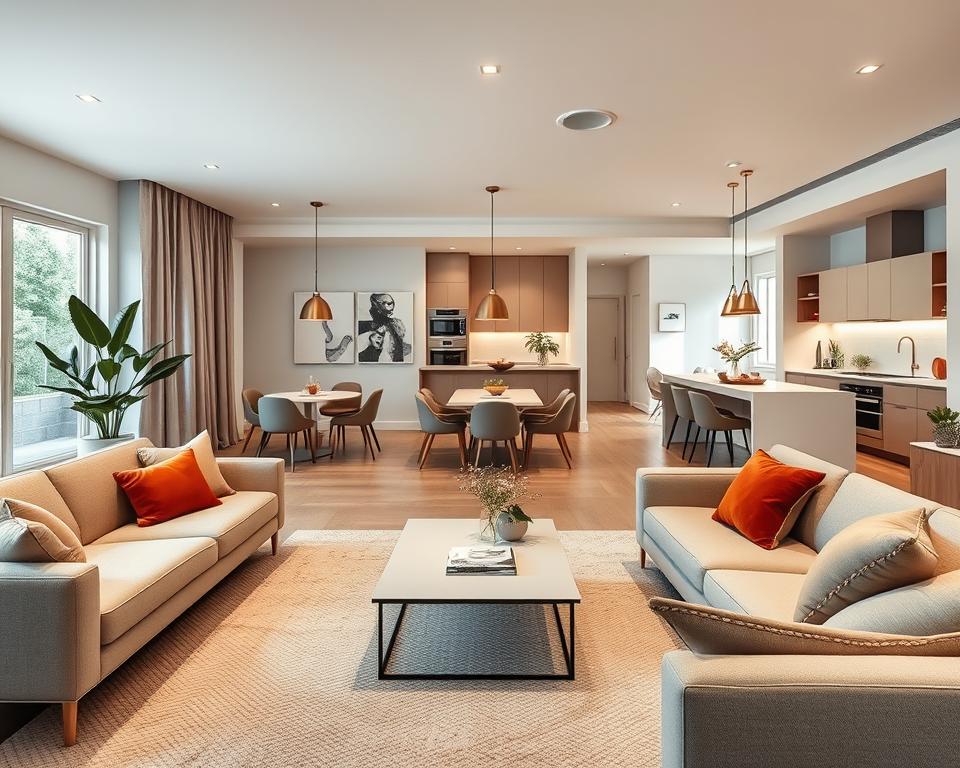
Living rooms: sculptural seating, maximalist mirrors, and adaptive lighting
Choose sculptural seating with algorithmic ergonomic profiles from Decorilla briefs to support natural alignment. Anchor the room with maximalist mosaic mirrors—irregular shards with embedded LEDs—so the wall reads as art and light at once.
Build layered, adaptive lighting that shifts from task to ambient to sculptural modes using glass, metal, and fabric diffusers. As living room trends 2026 mature, hybrid fixtures let a space glide from quiet reading to lively hosting without clutter.
Kitchens: nature-mimicking textures and color-forward cabinetry
Let kitchen color cabinets in electric blues and lime greens set the tone, then ground them with carved wood, textured stone, and plaster that echo rippling water or bark. These nature-mimicking textures add grip, shadow, and calm.
Blend function and art with OLED murals that can display recipes by day and digital landscapes by night. The result pairs bold color with tactile relief for a kitchen that works hard and feels alive.
Bedrooms: tactile headboards, drapery as architecture, and calm palettes
Frame the bed with tactile headboards in recycled cork or carved surfaces for quiet warmth. Use drapery architecture to zone sleep, vanity, or desk areas; GrecoDeco’s Villa Inkognito shows how a fabric plane can even replace a headboard.
Keep palettes warm and low-contrast for rest, guided by AD PRO’s focus on restorative neutrals. Soft textures invite slower evenings and a steady morning start.
Entries and halls: 3D wall treatments that add depth in tight spaces
In compact passages, 3D wall coverings hallways by Élitis, Fromental, de Gournay, or Lala Curio add movement and light play that guide the eye forward. Dimensional patterns stretch perception where floor area is limited.
Consider sound-dampening, padded options like Élitis Rayures Jumelles to soften echoes near stairs or doors. These treatments sync with living room trends 2026 by extending craft and comfort from the threshold inward.
Tech meets tactility: AI, smart systems, and algorithmic ergonomics
Homes shift from passive shells to living partners. In AI smart home interiors, sensors read patterns and fine-tune comfort without fuss. The result is responsive interiors 2026 that feel human, not high-tech, while leaning on energy-efficient design tech to trim waste and heat.
Touch still matters. Materials stay warm and grippy, while software disappears into the background. Algorithmic ergonomics translates posture data into shapes you can feel—support that meets the body, not the other way around.
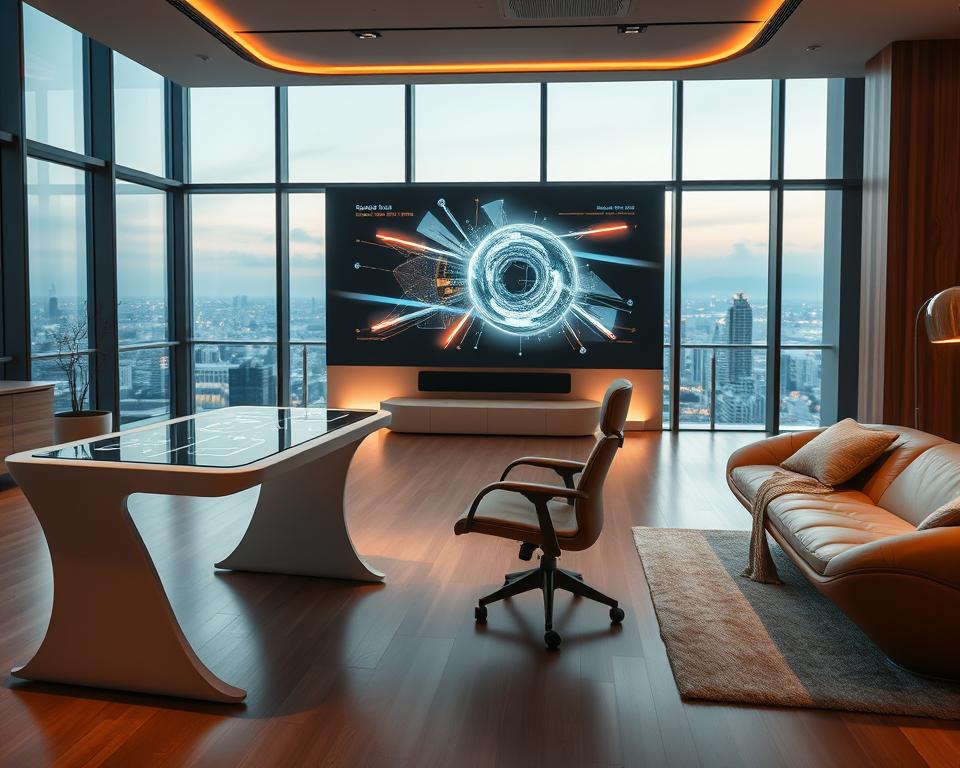
Data-driven furniture profiles that support natural alignment
Chairs and loungers use algorithmic ergonomics to map pressure points and micro-movements. Seat pans tilt to decompress hips; lumbar zones flex to keep the spine tall. In responsive interiors 2026, these profiles sync with daily routines, shifting from work focus to evening rest.
Brands pair motion sensors with memory foam, molded plywood, and 3D-knit fabrics. The aim is simple: reduce strain and extend comfort, hour after hour, without bulky mechanisms.
AI-sustainability balance for comfort, light, and energy efficiency
AI smart home interiors now balance temperature, air quality, and light based on occupancy and mood cues. Energy-efficient design tech nudges blinds, recalibrates LEDs, and staggers HVAC cycles to save power while keeping rooms steady and calm.
Hydroponic planters run adaptive grow lights and moisture schedules. By learning usage patterns, the system cuts waste and keeps plants thriving, adding texture and better air to high-activity zones.
Dynamic displays and virtual art with OLED murals
Walls become canvases with OLED mural displays that blend color and motion into architecture. Scenes evolve across the day—soft dawn gradients for ease, crisp textures for focus, and low-glare hues for night.
In responsive interiors 2026, these displays pair with energy-efficient design tech to modulate brightness and draw less power. Curated playlists of virtual art refresh seasonally, turning a room into a living gallery without frames or clutter.
| Feature | What It Does | User Benefit | 2026 Interior Tie-In |
|---|---|---|---|
| Algorithmic ergonomics seating | Analyzes posture and pressure to shape seat and back support | Reduces fatigue; promotes natural alignment | Adaptive loungers and task chairs that shift through the day |
| AI climate and lighting | Predicts occupancy, tunes LEDs and HVAC in real time | Lower bills with steady comfort | Energy-efficient design tech that feels invisible |
| OLED mural displays | Flexible, low-profile screens for ambient visuals | Virtual art without clutter or glare | AI smart home interiors with mood-responsive walls |
| Sensor-rich materials | Embedded cues track motion, temperature, and touch | Faster, quieter adjustments | Responsive interiors 2026 that learn habits |
Materials that matter: sustainable luxury and circular design
In 2026, homes favor one-of-a-kind pieces made from sustainable luxury materials with clear, traceable origins. Buyers ask for certificates and maker notes, turning traceable furniture into the new baseline of trust. Brands like Herman Miller, Coyuchi, and Vitra highlight provenance, while hyper-local studios elevate eco-conscious craft that feels personal and enduring.
Designers lean into circular design interiors with components that can be repaired, swapped, and resold. Cabinets and sofas use modular hardware, so parts live several lives. Offcuts become reclaimed wood mosaics, forming irregular wall panels that add depth and shadow. The result is tactility with purpose, not waste.
Textiles balance ethics and drama. Recycled-bottle faux furs land in hot, saturated patterns—electric blue stripes on a lounge throw, neon leopard cushions on a low-profile sofa, oversized rugs underfoot. These statement pieces read as indulgent, yet they fit the promise of sustainable luxury materials and support eco-conscious craft.
Nature-mimicking finishes add performance. Cork floors soften sound in open plans. Carved wood and hand-troweled plaster build relief that catches light and hides wear. In rooms that need quiet, these materials lift comfort while reinforcing circular design interiors and the value of traceable furniture.
Patronage returns to the wall. Artisans produce embroidered grasscloth, bas-relief plaster, and shellwork in small runs. Studios such as de Gournay, Phillip Jeffries, and Fromental show how handmade processes preserve skill, pairing sustainable luxury materials with methods that last. Paired with reclaimed wood mosaics, these layers create identity without excess.
For specification, look for transparency first, then longevity. Ask for chain-of-custody details, repair kits, and end-of-life plans. When in doubt, choose modular pieces, low-VOC finishes, and local makers whose eco-conscious craft supports community while keeping transport light.
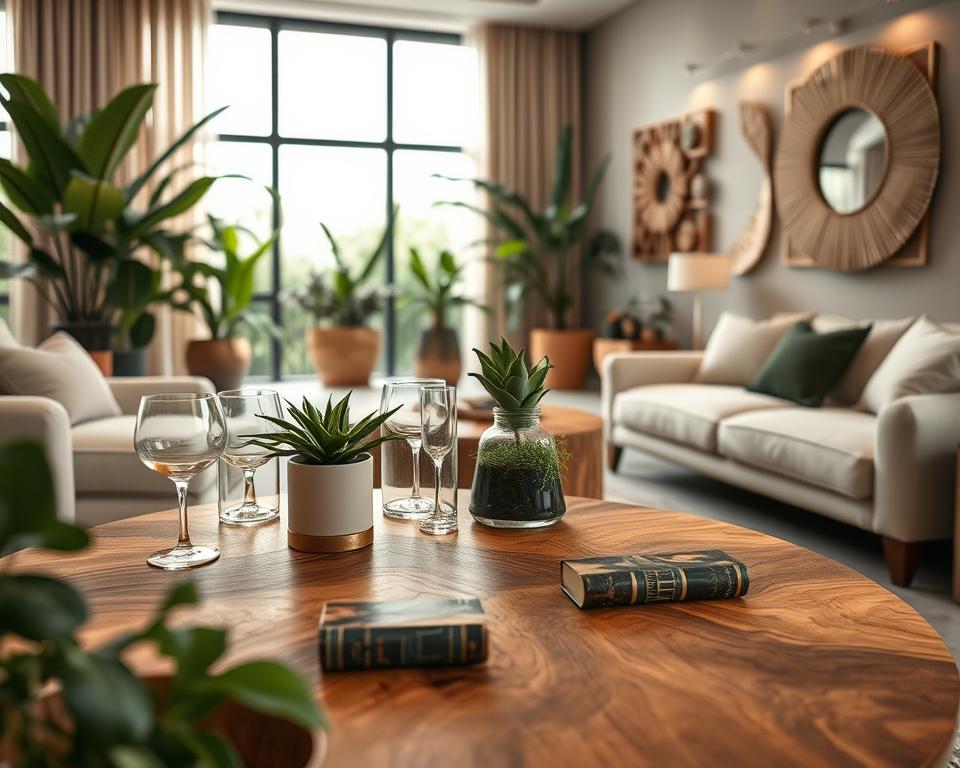
Biophilic evolution: from token greenery to AI-powered indoor gardens
Biophilic interiors 2026 move from potted plants to living systems that shape how we rest, cook, and focus. Compact rigs slip into small homes and large lofts without clutter. The result is fresh air, gentle rhythm, and a view that grows.
Compact hydroponic systems as sculptural features
Wall-mounted frames in recycled aluminum or bamboo act like art. These hydroponic wall systems sprout basil, mint, and microgreens while doubling as a statement panel. Plug-and-play kits from brands like Gardyn and Click & Grow make setup easy for renters.
Placed near daylight, the greenery enriches clay and terracotta tones and keeps sightlines calm. AI indoor gardens turn a blank wall into a living facade that anchors open plans.
Soundscapes, light cycles, and real-time care via AI
AI-timed LEDs sync growth to soundscape lighting cycles that match circadian cues. Soft audio layers pair with tuned brightness to steady mood and focus. Nutrient dosing and watering adjust in real time, so leaves stay glossy and yields stay steady.
These cues blend with media rooms and kitchens alike, joining wellness with daily routines. In biophilic interiors 2026, sensors refine the experience without stealing attention.
Natural textures—cork, reclaimed wood, and carved surfaces
Material choices deepen the effect. Natural textures cork reclaimed wood add warmth and grip. Recycled cork headboards can ripple with shallow carving, while reclaimed wood gains tactility with CNC lines and micro-drilled dots.
Etched plaster and acoustic 3D wallpapers calm echo and frame the green wall. The mix keeps touch, scent, and sight working together.
| Element | Design Role | Wellness Benefit | Best Placement | Notes |
|---|---|---|---|---|
| AI indoor gardens | Living focal point | Cleaner air; visual rest | South or east walls | Use recycled frames to reduce weight and footprint |
| Hydroponic wall systems | Vertical harvest | Fresh herbs on demand | Kitchens and dining zones | Pair with terracotta accents for color harmony |
| Soundscape lighting cycles | Rhythm and mood | Better sleep and focus | Bedrooms, studies | Align LED spectrum with morning–evening routines |
| Natural textures cork reclaimed wood | Tactile backdrop | Reduced echo; warm touch | Headboards, hall panels | Combine carved cork with soft plaster for contrast |
| Carved and etched surfaces | Light-play and depth | Lower glare; quiet patterns | Living rooms, entries | Use shallow grooves to catch daylight without dust traps |
Craft renaissance: freehand artistry, embroidery on wood, and passementerie
Craft returns with bold tactility and quiet emotion. Homes favor touchable detail, from brush-danced walls to trims with character. In this wave, freehand artistry interiors, embroidered wood CNC, fringe tassels cording, and custom hand-painted tile shape rooms with human warmth fit for passementerie 2026.
Freehand brushwork on walls, fabrics, and ceramics
Loose strokes invite the eye to wander and rest. Hand-painted motifs glide across plaster, linen, and stoneware, softening hard edges. This approach lets color drift, adding depth to freehand artistry interiors without strict grids or perfect repeats.
Threaded, CNC-routed, and micro-drilled patterns in timber
Timber gains a woven look through precise routing. Embroidered wood CNC channels and tiny drillwork create shadows that move with the light. Reclaimed offcuts, set as mosaics, amplify grain and tell a story of mindful making.
Fringe, tassels, and cording—modern twists on old-world trimmings
Designers elevate sofas, chairs, and drapery with lively borders. Fringe tassels cording define silhouettes, from bullion swish to slim contrast lines. These gestures nod to heritage yet read fresh, a clear marker of passementerie 2026.
Custom tilework as personal storytelling
Surfaces carry memory when painted by hand. A backsplash can map a family’s pets or a city block, while a shower niche echoes local flora. With custom hand-painted tile, rooms gain narrative layers that age with grace and use.
Lighting reimagined: modular and hybrid systems for mood and task
Lighting in 2026 is fluid, fast to rearrange, and tuned to how people live. Homes lean on modular lighting systems that click together like building blocks, forming linear runs, rings, and wall constellations. With one gesture, heads pivot, lenses swap, and beams reshape for work, dining, or rest.
Designers pair metal, glass, and fabric to craft hybrid lighting 2026 schemes that shift from crisp output to soft glow. This material mix boosts comfort and supports behavior-based layouts. You get task-to-ambient lighting in a single track, so a focused desk scene can widen into a warm, social halo by night.
Adaptive illumination responds to presence, daylight, and activity. Scene presets change intensity and color warmth to reduce glare and eye strain. Acoustic-aware wall panels and 3D surfaces manage echo and scatter light, shaping sound and shadow for deeper calm and clearer focus.
Ultra-thin OLED art lighting turns walls into luminous murals. Panels showcase evolving visuals or circadian-friendly animations, merging content with light. The result complements modular lighting systems overhead, tying mood, task, and art into one responsive canvas.
From studio apartments to open-plan homes, flexibility rules. Hybrid lighting 2026 plans favor magnetic tracks, swappable optics, and ceiling-to-wall bridges. With task-to-ambient lighting baked in, a kitchen island, a reading nook, and a video call zone each get the right layer—no excess fixtures, no visual clutter.
What’s in, what’s out: editing trends for longevity and practicality
The pulse of 2026 interior trends in and out favors design that lasts, feels personal, and works hard day to day. Rooms lean welcoming yet refined, with choices that look light on the eye and easy to live with.
Lighter, sculptural furniture over oversized, visually heavy pieces
Designers are championing lighter sculptural furniture that frees up floor space and flow. As Evan Clabots at Cozey notes, puffy silhouettes skew trend-specific and can overwhelm. Katie McPherson of Meyer Davis points to sinuous frames and open bases that feel artful yet comfortable.
Think cast-aluminum legs, curved wood arms, and tight-seat sofas that still invite lounging. The idea is poise without bulk.
Beyond millennial gray and all-white: warmer, personal palettes
The era of stark cool neutrals fades as warm palettes rise. Gray Benko’s color-forward eye signals a turn to cremèle, caramel, and clay notes that soften light and add calm. Saturated brights step in as accents on doors, shelves, or trim to energize a zone.
Layer these hues room by room so the home reads cohesive but not cloned.
From bouclé to varied textures—mohair, velvet, woven knits, and prints
Texture mix beyond boucle brings depth without weight. Mohair and velvet add plushness; woven knits keep things relaxed. Prints—paisley, argyle, and classic plaids—balance solids and make upholstery feel tailored.
Aim for a tactile trio per room: one plush, one matte, one patterned.
Mismatched, collected furnishings over matching sets
Collected mismatched decor beats one-note suites. Vintage with new, artisan with retail—this blend builds character and reduces waste. Anchor with a shared material, like walnut or iron, then vary scale and silhouette.
Books, pottery, and framed textiles finish the story and improve longevity.
Embellished details, trims, and considered edges
Small moves matter. Embellished trims, hand stitching, and crisp piping signal care. Passementerie returns in a modern way—fringe, tassels, and cording on pillows, ottomans, and drapery for soft motion and shadow play.
Choose tone-on-tone for subtlety or a contrast edge for sharp definition.
- In: lighter sculptural furniture; warm palettes; texture mix beyond boucle; collected mismatched decor; embellished trims
- Out: oversized bulky seating; all-white austerity; single-fabric rooms; one-brand matching sets; raw edges without finish
Conclusion
The 2026 interior outlook for the United States favors rooms that respond to people first. Spaces blend soft geometry, expressive color, and adaptive light to support daily life. Strategic hues act like architecture—cremèle neutrals, clay revival tones, and electric saturation—while textured, 3D surfaces add depth without clutter. Layered lighting shifts from task to mood, aligning with a future-proof home design that feels warm, nimble, and personal.
Material choices move toward sustainable expressive interiors without losing comfort. Traceable pieces, reclaimed mosaics, and recycled textiles create tactile richness with a clear conscience, echoing guidance seen across Decorilla and AD PRO coverage. Biophilic design matures with AI-powered indoor gardens, cork and reclaimed wood, and crafted finishes that hold up to real life. These moves echo American home trends 2026, where nature, tech, and touch work in sync.
Craft returns as a marker of identity. Freehand brushwork, custom tilework, and refined passementerie offer human detail at room scale. Lighter, sculptural furniture replaces bulky forms, while warmer palettes and mixed textures—from velvet to woven knits—build comfort without excess. Collected furnishings outlast fast cycles, improving durability and editing visual noise.
Taken together, this style design house 2026 interior reads as intelligent and soulful. It is adaptable, ecological, and tailored to behavior. With clear color strategy, circular materials, and maker-led detail, American home trends 2026 point to spaces that think ahead and age well—proof that a future-proof home design can also feel timeless.